
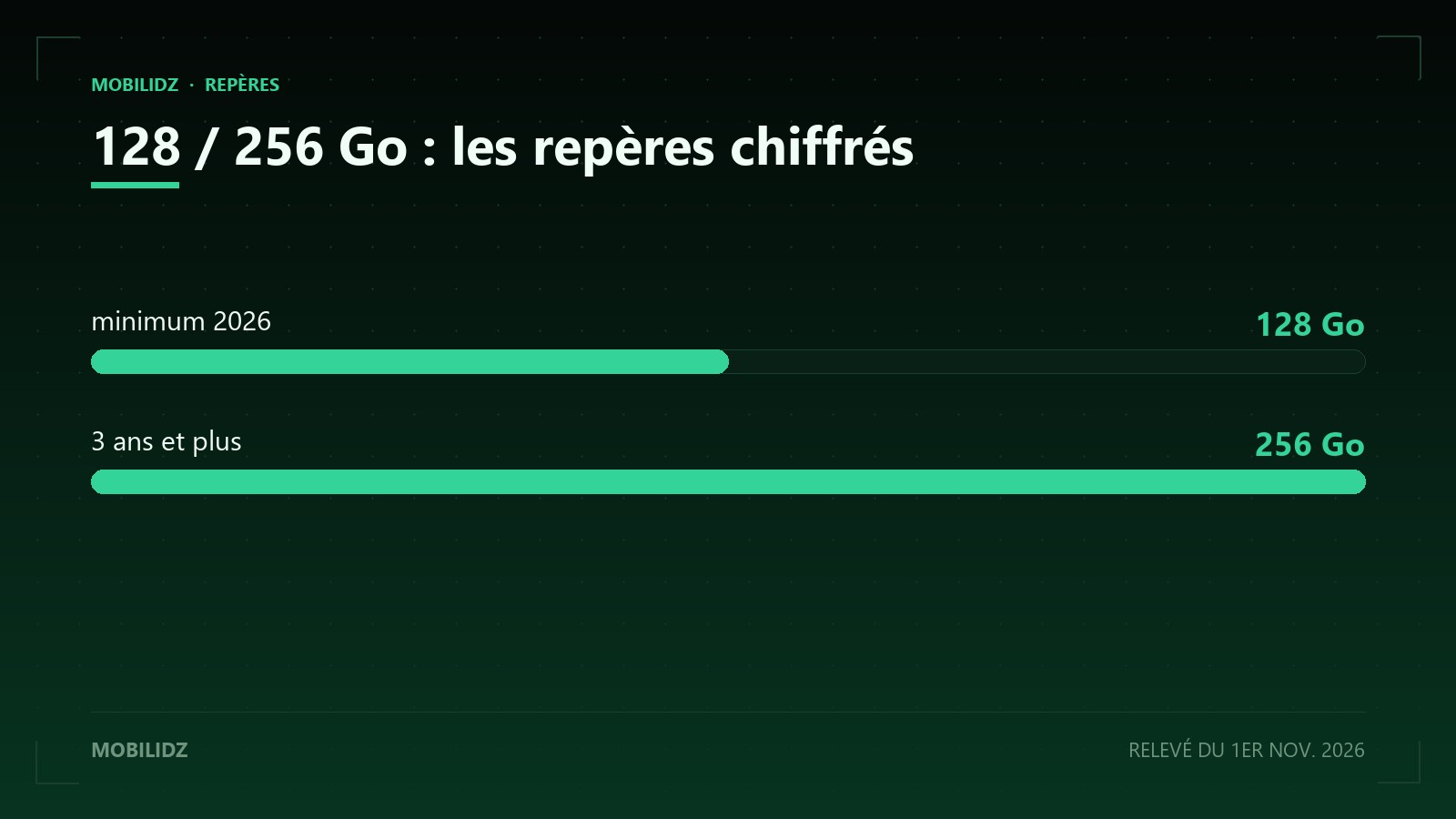
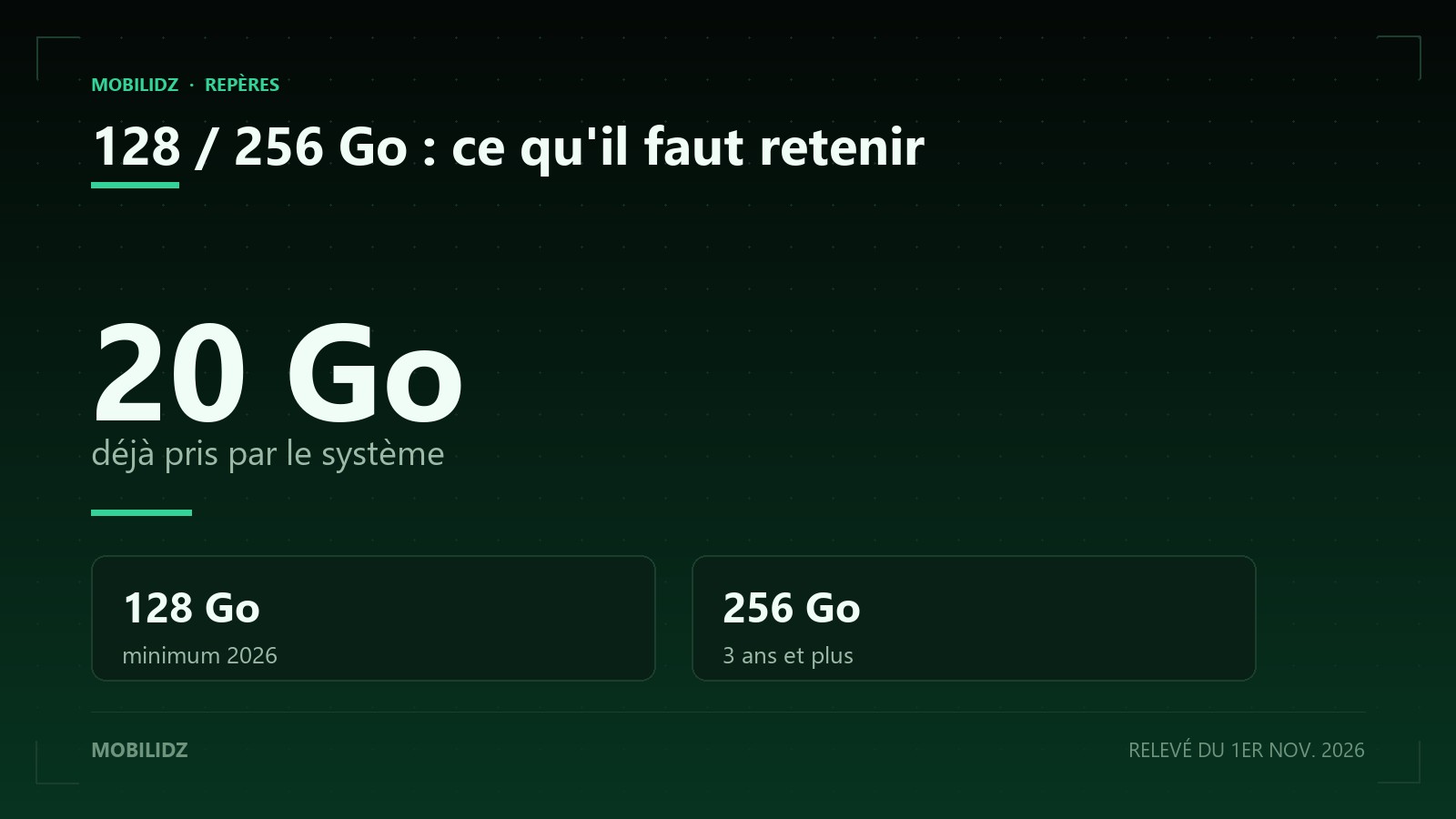
Choose 256 GB if you keep a phone more than three years, shoot 4K video or play several heavy games. Choose 128 GB if you change every two years and keep photos in the cloud. Below 128 GB, the device will be full before the end of its useful life.
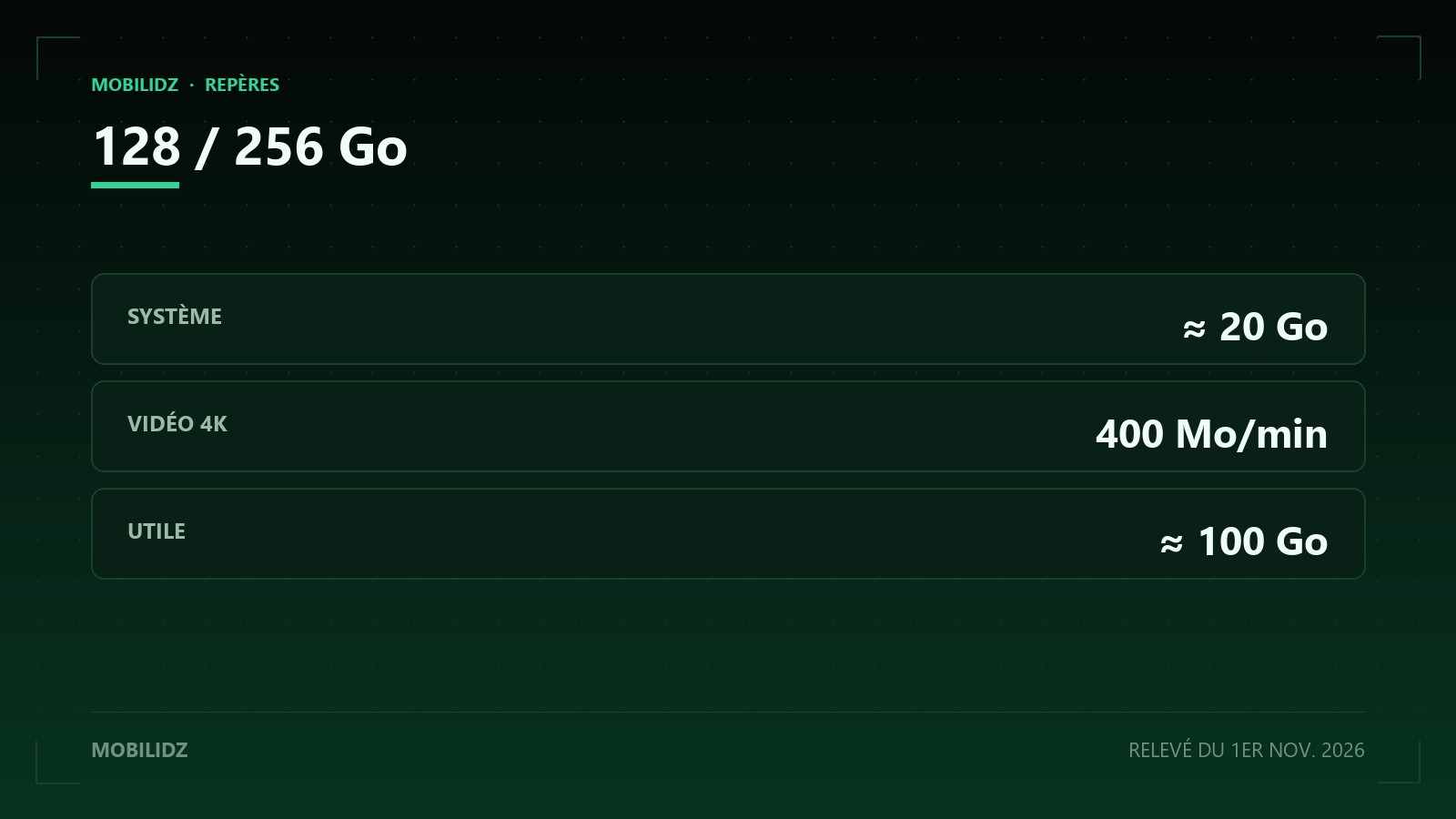
Of the 128 GB advertised, around a hundred remain genuinely free. Android or iOS plus preinstalled apps take the rest, and that share grows with updates. A new 64 GB phone often shows less than 45 GB free.
What actually fills a phone
Photos take little space: a few megabytes each. Video takes much more. One minute in 4K weighs several hundred megabytes, and ten minutes of holiday footage can exceed 3 GB. If you film regularly, 128 GB becomes tight within two years.
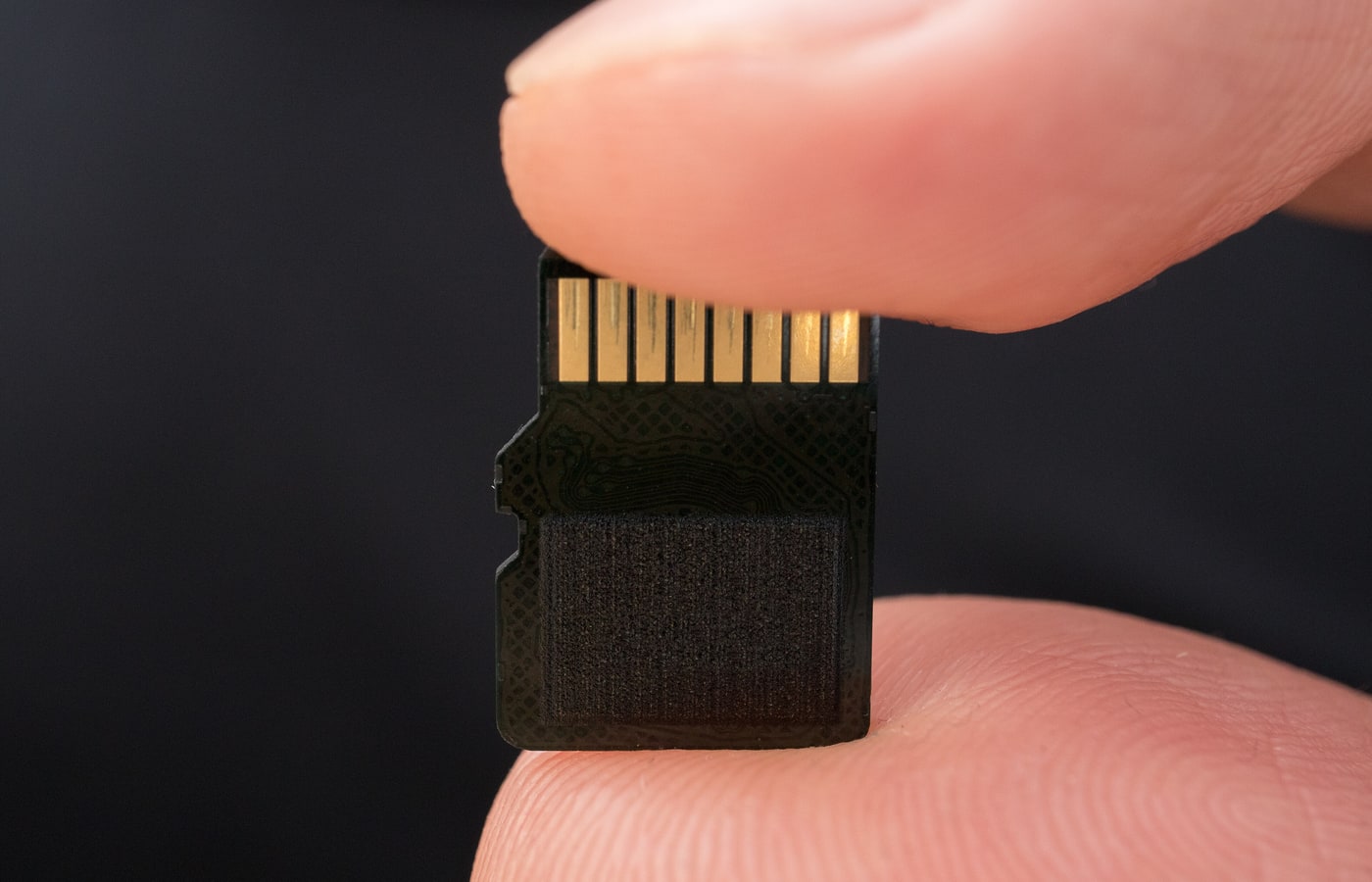
Photo: Ivan Radic / Wikimedia Commons — CC BY 2.0.
Games are the second item. A recent 3D game occupies 5 to 15 GB, and updates add gigabytes. Three installed games can consume 30 GB. WhatsApp alone, with chat backups and media, easily reaches 10 GB.
128 GB, the 2026 minimum
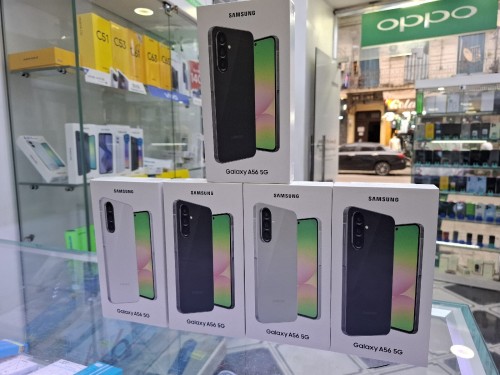
With 128 GB you have room for two years of normal use: photos, some video, two or three games and everyday apps. That is the capacity of most phones between DZD 60,000 and 100,000, such as the Galaxy A56 5G in 8 GB / 128 GB.
The risk is not immediate shortage but end of life. After three years of photos and updates, often less than 15 GB remains. The phone slows down, apps refuse to update, and constant sorting becomes necessary.
256 GB, the peace-of-mind choice
With 256 GB you double the headroom without changing habits. That is the capacity to favour if you film, download series or keep photos locally. The Honor X9d offers 12 GB / 256 GB at DZD 72,500, the price of a competing 128 GB model.

The premium depends on the model. In some ranges, moving from 128 to 256 GB costs DZD 10,000 to 20,000. In others the 256 GB version does not exist, or arrives with more RAM, which also changes smoothness.
The cloud does not replace everything
Backing photos up to the cloud frees space but does not solve everything. 4K video, games and apps stay on the device. A limited mobile connection makes streaming unreliable, and not everyone has a comfortable data plan.
A microSD card remains an option on some Android phones, but it is slower than internal memory and often absent from high-end models. Do not rely on it to compensate for a purchase that is too tight.
Photos and videos per gigabyte
A gigabyte holds around 250 twelve-megapixel photos, or two minutes of 4K video. The 100 GB actually usable therefore represent nearly 25,000 photos, or three hours of 4K video. If you film more than three hours a year, 256 GB becomes the comfortable minimum. That is the simplest calculation to settle it.
Verdict
Take 128 GB if your phone costs under DZD 70,000 and you keep it two years. Take 256 GB above DZD 80,000, or if you shoot 4K, or if you keep the device more than three years. Avoid 64 GB in 2026, and do not pay for 512 GB unless you genuinely need local storage.


