

A 120 W charger will not charge a phone capped at 25 W any faster. Real speed depends on three things: the protocol the phone accepts, the charger's power and the cable quality. The weakest of the three sets the result.
That is why a universal charger bought at random disappoints. It charges, but slowly, even when the label says 65 W. Here is how to choose without getting it wrong.
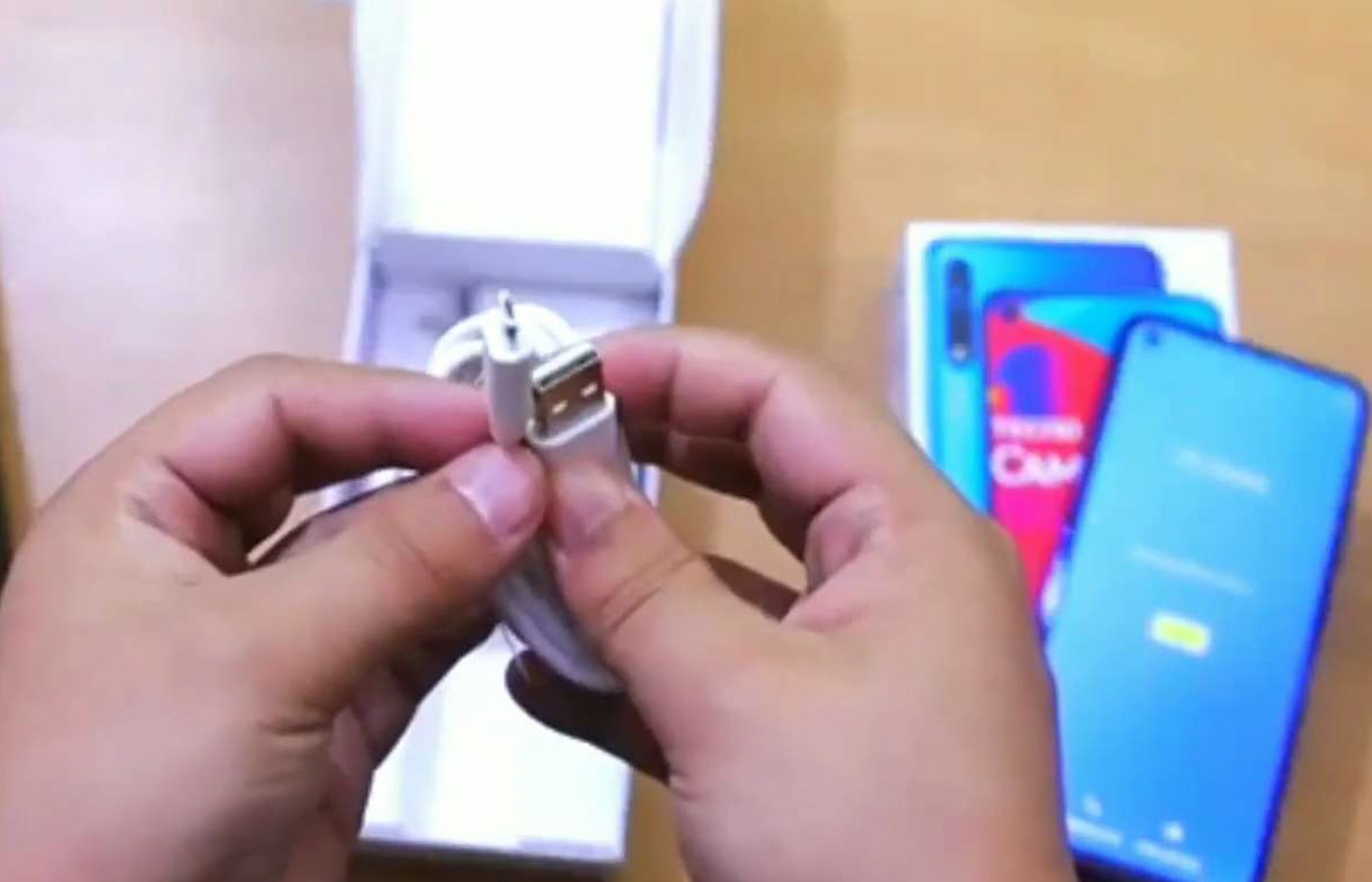
Photo: TECHNICAL RAJU GURU / Wikimedia Commons — CC BY 3.0.
The phone sets the speed
Each manufacturer defines a maximum power and a charging curve. A Galaxy S26 Ultra and a OnePlus 15 share neither battery nor limits. Plugging the OnePlus charger into the Samsung does not speed it up: the Samsung negotiates the power it accepts.
Capacity matters too. A 7,300 mAh battery needs more energy than a 4,300 mAh one to reach 100%. A big-battery phone can therefore seem slower while charging at the same wattage.
The protocols to know
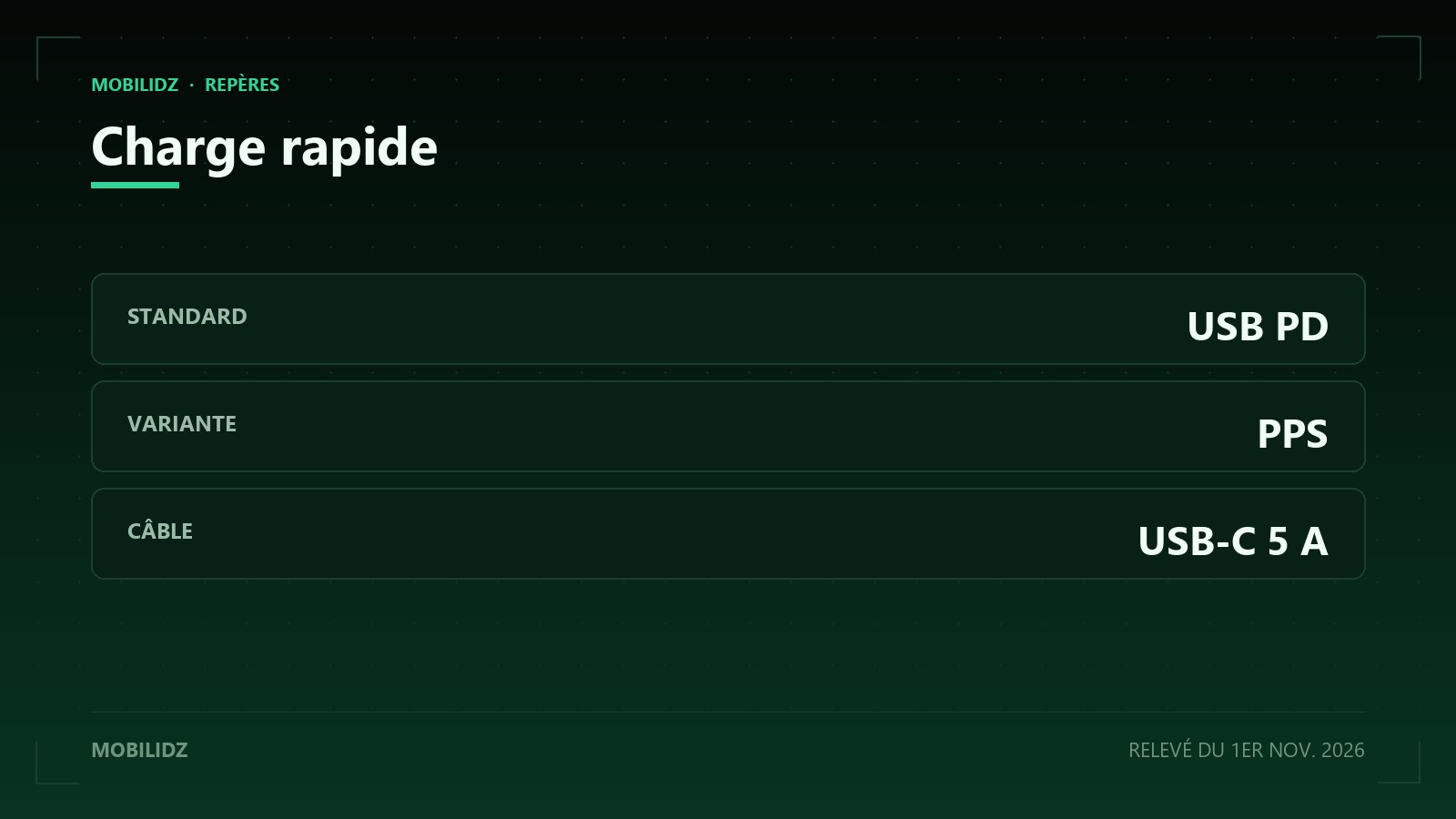
USB Power Delivery is the common standard. It covers most recent phones and allows 25 to 100 W depending on version and cable. It is the protocol to favour for a versatile charger.
PPS, a Power Delivery variant, lets the phone request a precise voltage. Many high-end Android phones use it. A USB PD charger without PPS will charge, but more slowly.
Quick Charge is Qualcomm's protocol and remains common on Snapdragon phones. Finally, proprietary protocols such as SuperVOOC on Oppo and OnePlus require a charger from the same brand to reach maximum speed.

OnePlus 15
12GB RAM · 256GB · 6.78 · AMOLED BOE X3
The cable, the forgotten link
A USB-A to USB-C cable often caps at 15 W, even on a powerful charger. High wattages need a USB-C to USB-C cable rated for 5 A, with the matching signalling chip.
Very cheap cables do not always carry those specs. A short, thick cable charges better than a long, thin one. If your phone charges slowly on a recent charger, change the cable before the charger.
What fast charging costs
Fast charging heats the battery, and heat accelerates ageing. Manufacturers limit power beyond 80%, which explains the slowdown at the end. That is not a fault, it is protection.
To preserve a battery, charge mostly between 20% and 80%, avoid fast charging in direct sun and remove the case if the phone gets hot. Occasional fast charging is not a problem.
Safety: avoid anonymous chargers
An unbranded charger sold at a third of the price may not respect electrical insulation. Incidents with uncertified chargers exist, even if they are rare. Look for a genuine CE mark, a model number and a consistent power rating.
A 65 W charger at DZD 1,500 is suspicious. A 25 W charger from a known brand at DZD 4,000 is safer, and enough for most phones.
The charger in the box
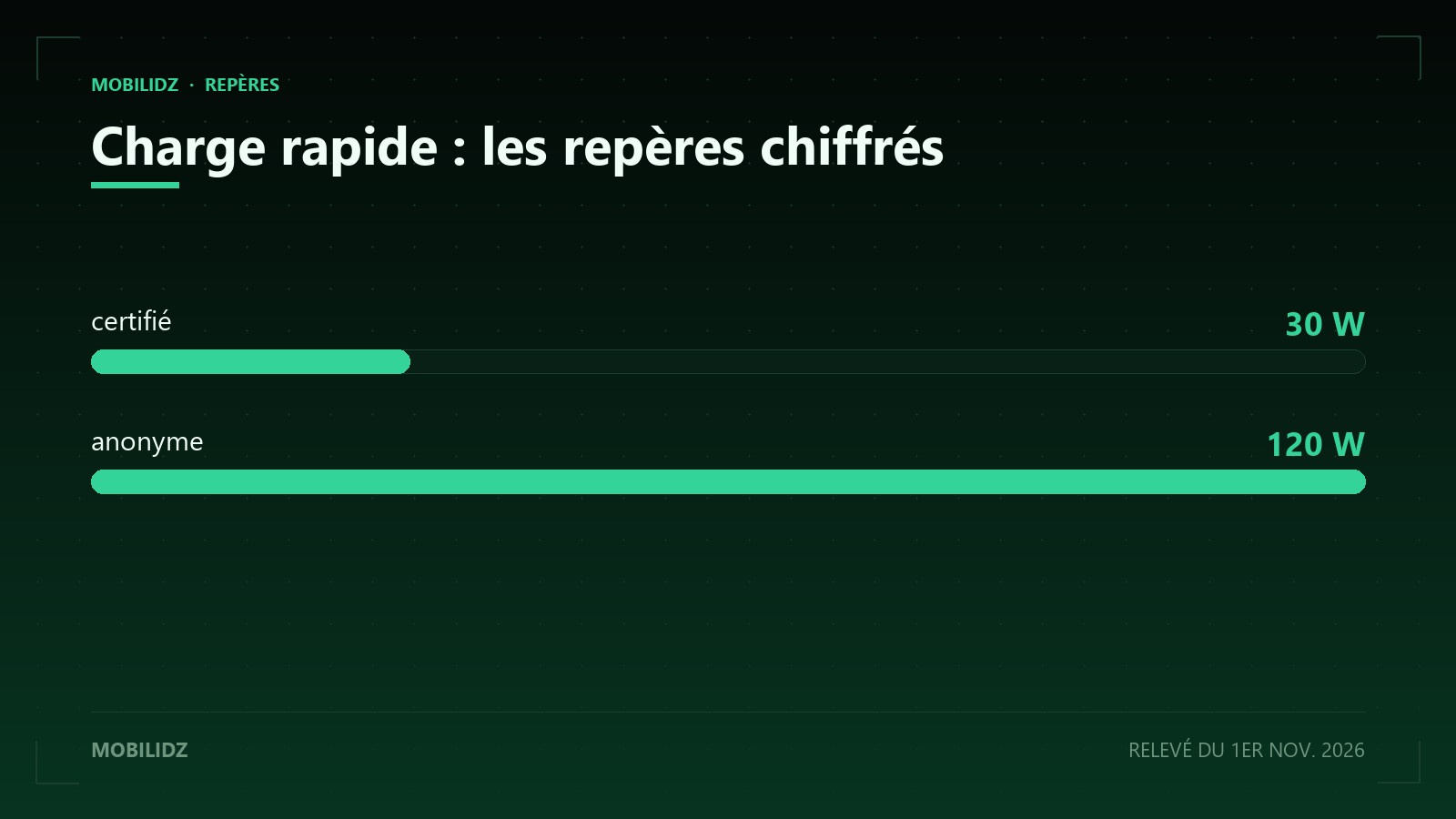
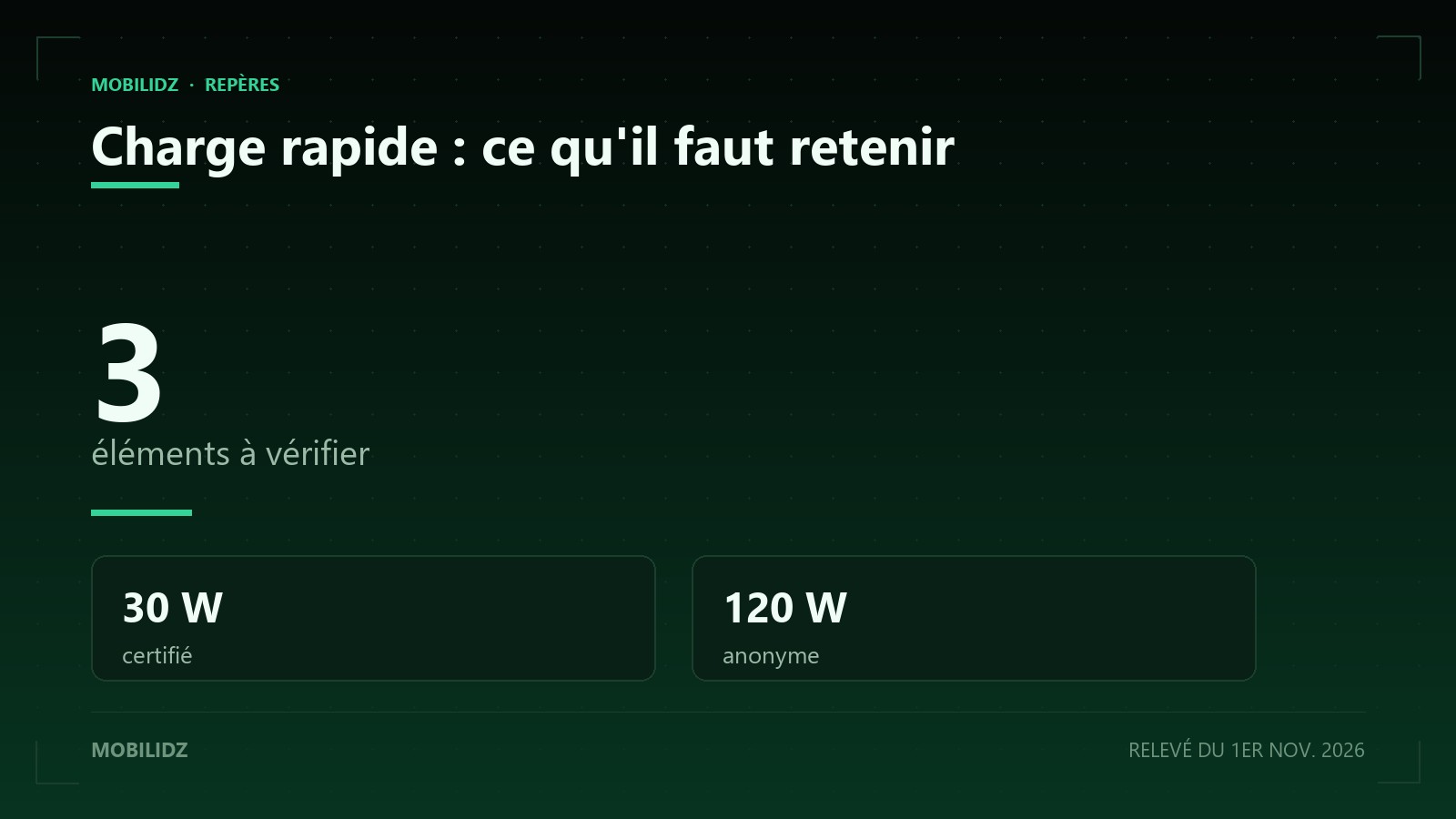
More and more phones arrive without a charger. A certified 30 W USB Power Delivery brick costs DZD 3,000 to 6,000 and covers most models: no point paying for a 120 W unit the phone will only partly use. Keep the original cable, since that is what most often limits the rate.
Verdict
Buy a USB Power Delivery charger with PPS if your phone supports it, a good USB-C to USB-C cable, and do not pay for watts your phone cannot use. A certified 30 W charger beats an anonymous 120 W one.


