

How do you define an Ultra smartphone in 2025? Xiaomi and Samsung give diametrically opposed answers. The Galaxy S25 Ultra aims to be Android's reference point: complete, versatile, with a first-rank camera sensor. The Xiaomi 15 Ultra presents itself as a professional camera to which someone added phone functions. Which one matches your daily use in Algeria? Here is the detailed comparison of these two heavyweights.
Design and ergonomics: two aesthetic approaches
These two giants are imposing phablets, but their design philosophies diverge completely. The Galaxy S25 Ultra adopts a minimalist, angular aesthetic: flat screen, flat back, straight edges. It produces a very industrial look — and a certain rigidity. Samsung made it a little thinner and lighter than its predecessor, but its width and weight still register in the hand.
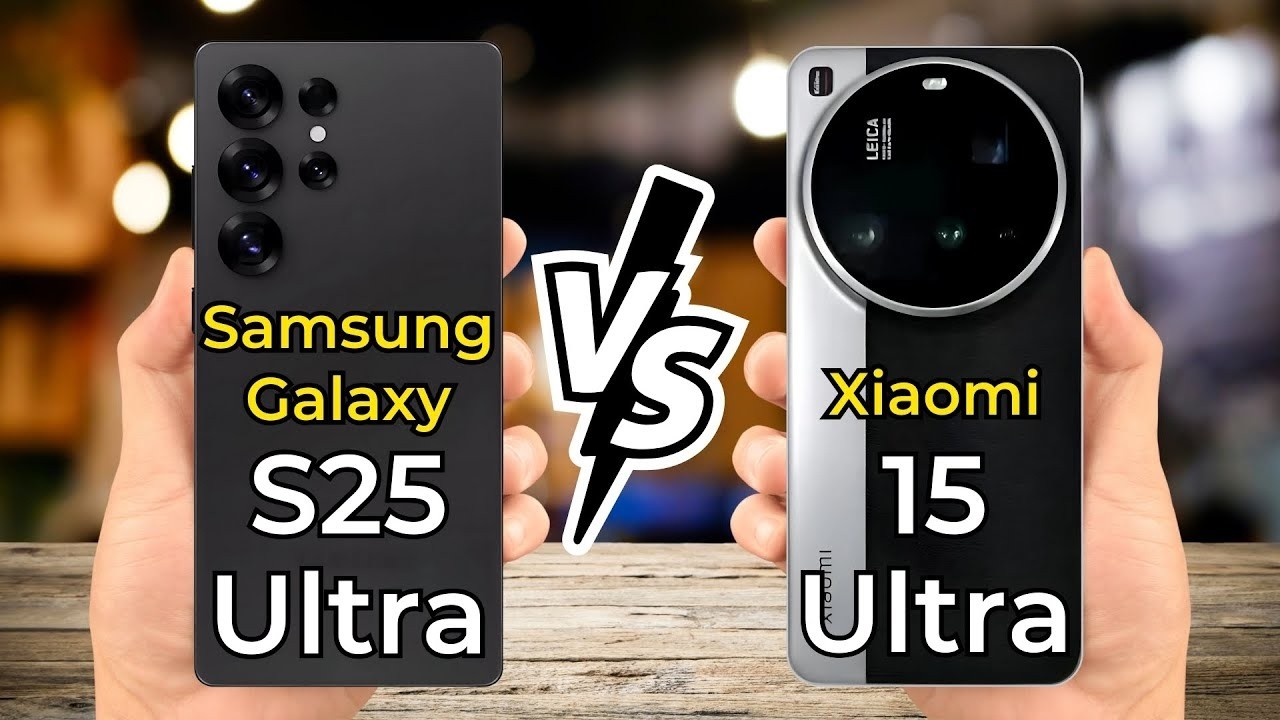
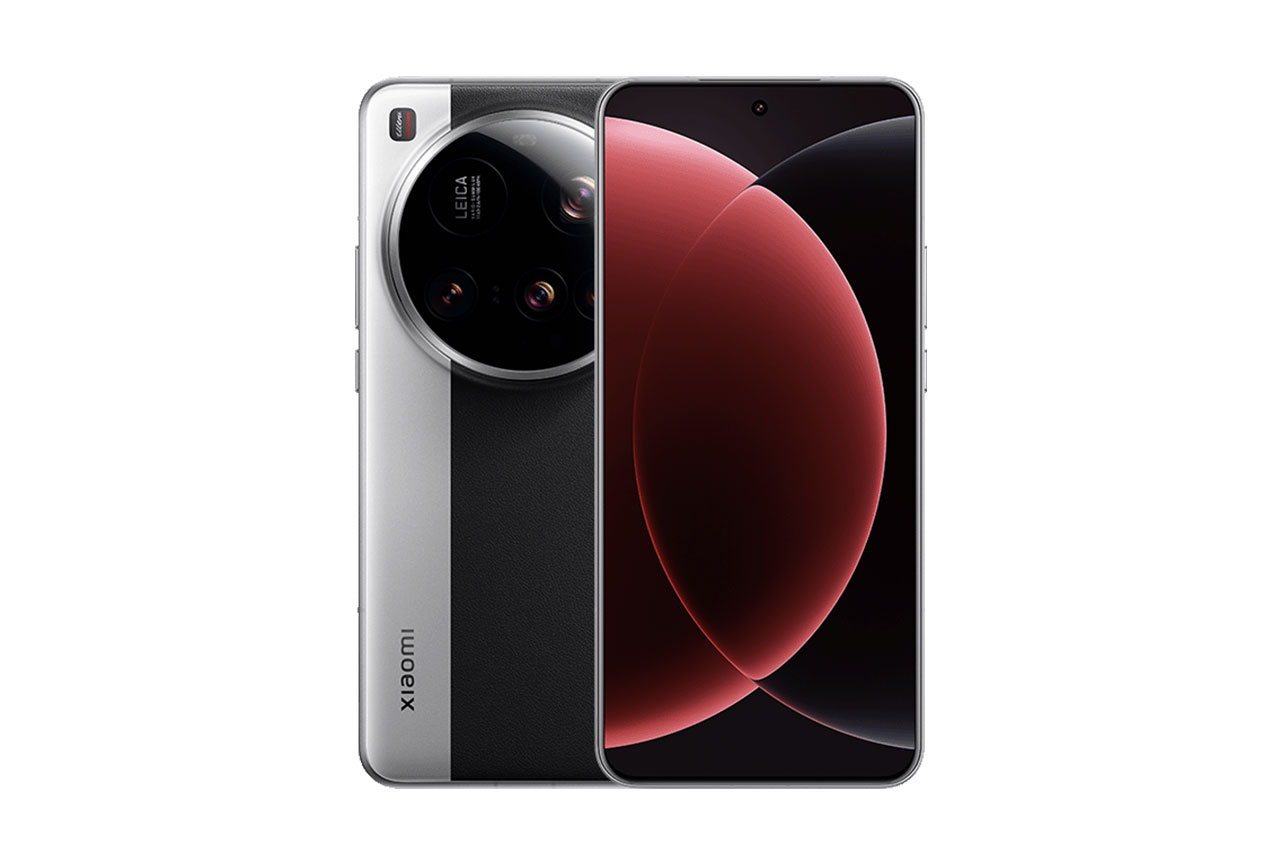
The Xiaomi 15 Ultra opts for rounder, more organic shapes. The result is a device that's more comfortable to hold and more discreet in a pocket. However, its imposing central camera module, inspired by DSLRs, can get in the way of handling — unlike the Galaxy's near-flush sensors. For an Algerian user who carries their phone all day, that ergonomic detail is far from trivial.
- Galaxy S25 Ultra: screen protected by Gorilla Armor 2 glass-ceramic, Gorilla Glass Victus 2 back, titanium frame.
- Xiaomi 15 Ultra: Shield Glass 2.0 screen, eco-leather or fibreglass back, aluminium frame.
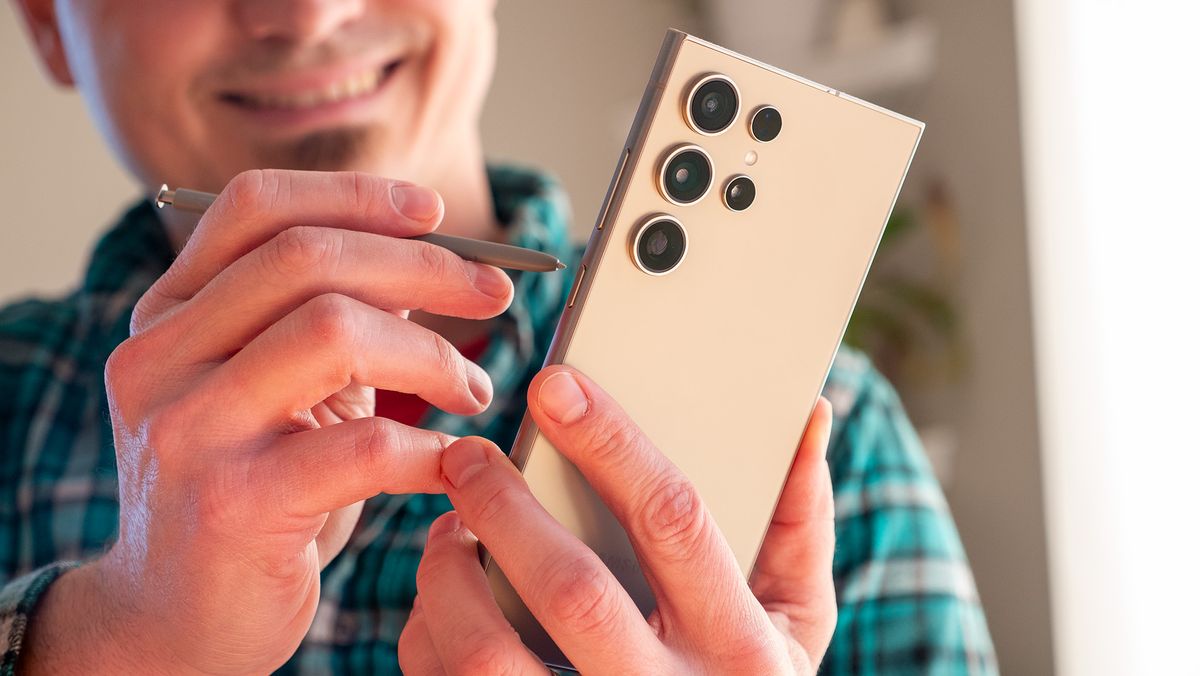
Both are IP68 certified (dust and water, 1.5 m / 30 min). The Galaxy stands out with its integrated S Pen — even though the camera remote function disappeared this year. The Xiaomi offers an optional photography kit that amplifies its pro-camera personality.
Screen and performance: details that count
On paper both screens impress, but the technical subtleties abound. The Xiaomi 15 Ultra surprises with a 12-bit panel able to display 68 billion colours, where the Galaxy S25 Ultra sticks to an 8-bit panel capped at 16 million. To an untrained eye the gap seems small, but it shows in gradients. On HDR, the Xiaomi covers every standard including Dolby Vision, while the Galaxy stops at HDR10+.
Both screens are OLED with adaptive refresh from 1 to 120 Hz. The Galaxy's is slightly larger (6.9" vs 6.73"), but the Xiaomi's is a little less reflective — better readability under the Algerian sun.
For power, both carry the same Snapdragon 8 Elite. The Galaxy takes a slight edge in some multi-core and GPU benchmarks, but in real use the differences are imperceptible: fluidity is exemplary on both. The real divergence is software support:
- Samsung: 7 years of major updates and security patches
- Xiaomi: 4 OS updates and 6 years of patches
One UI remains one of Android's richest overlays, notably thanks to close collaboration with Google on AI.
Battery and charging: the performance race
Battery life is a crucial criterion for Algerian users, where power outlets aren't always within reach. The Xiaomi 15 Ultra carries a 5,410 mAh battery (silicon-carbon technology), against 5,000 mAh for the Galaxy S25 Ultra. In testing, the Xiaomi's endurance is broadly better, with a notable edge in web browsing. Both survive a day of heavy use, but the Xiaomi holds a lead.
Fast charging, however, differs in philosophy:
| Specification | Xiaomi 15 Ultra | Galaxy S25 Ultra |
|---|---|---|
| Wired charging | up to 90 W | up to 45 W |
| Wireless charging | up to 80 W (dedicated accessory) | up to 15 W (Qi2 ready) |
In practice the two are very close after 15 and 30 minutes. The Xiaomi's wireless charging is exceptionally fast but demands proprietary accessories. The Galaxy, with its more universal Qi2 standard, could benefit from automatic alignment in some recent cars — marginal but practical.

Xiaomi 15 Ultra
16GB RAM · 512GB · 6.73 · AMOLED
Camera: two irreconcilable philosophies
This is where the divergence is most spectacular. The Galaxy S25 Ultra offers a classic quad setup: 200 MP main, ultra-wide, and two telephotos (3x and 5x). Solid, versatile sensors without real novelty over last year.
The Xiaomi 15 Ultra takes a radically different approach, designed for image enthusiasts:
- Main sensor: a 1-inch sensor, among the last on the market at that size, for unmatched low-light quality.
- Long telephoto: a 100 mm (4.3x) lens paired with a 200 MP sensor, for exceptional optical zoom.
- Short telephoto: a 70 mm (3x) at 50 MP that also does macro, adding notable versatility.
Photos from both phones' main sensors are excellent. The Xiaomi delivers superior sharpness and detail precision across the frame, and better shadow modelling. The Galaxy S25 Ultra stands out with higher contrast and more neutral colours, often truer to reality. For mobile photography lovers, the choice is agonising.
In summary
The choice depends entirely on your priorities and usage.
Xiaomi 15 Ultra strengths:
- Superior camera: 1-inch sensor and exceptional zooms
- Better battery life and much faster charging
- More ergonomic design, assertive aesthetics
- Screen with superior colour depth
Galaxy S25 Ultra strengths:
- Far longer software support (7 years), a durability guarantee
- The most complete Android experience with One UI
- Integrated S Pen for productivity
- Premium titanium build
Watch-outs:
- The Xiaomi 15 Ultra's price sits in the ultra-premium tier (confirm the range with importers; far above mid-range); the Galaxy S25 Ultra's is higher still, at the absolute summit segment.
Frequently asked questions
Is the Xiaomi 15 Ultra really better at photography than the Galaxy S25 Ultra?
Yes — the Xiaomi 15 Ultra delivers superior image quality, mainly thanks to its 1-inch main sensor that excels at managing light and detail. But the Galaxy remains extremely versatile and reliable.
Is the Galaxy S25 Ultra's S Pen useful day to day?
If you take notes, draw or use your phone for productivity, the S Pen is a remarkably practical tool. Otherwise it remains a niche feature.
Is it worth waiting for the Xiaomi 15 Ultra or buying a Galaxy S24 Ultra now?
If photography is your absolute priority, waiting for the Xiaomi 15 Ultra is a good idea. If you want a complete, durable Android experience with 7 years of support, the Galaxy S24 Ultra (or S25 Ultra) is the safer long-term investment.
Is the price difference between the two justified?
It depends on what you're after. The Galaxy S25 Ultra's price is justified by its software, productivity and build; the Xiaomi 15 Ultra's by the raw performance of its camera. In Algeria, add one more criterion: service availability and resale value, where Samsung keeps the edge.


