
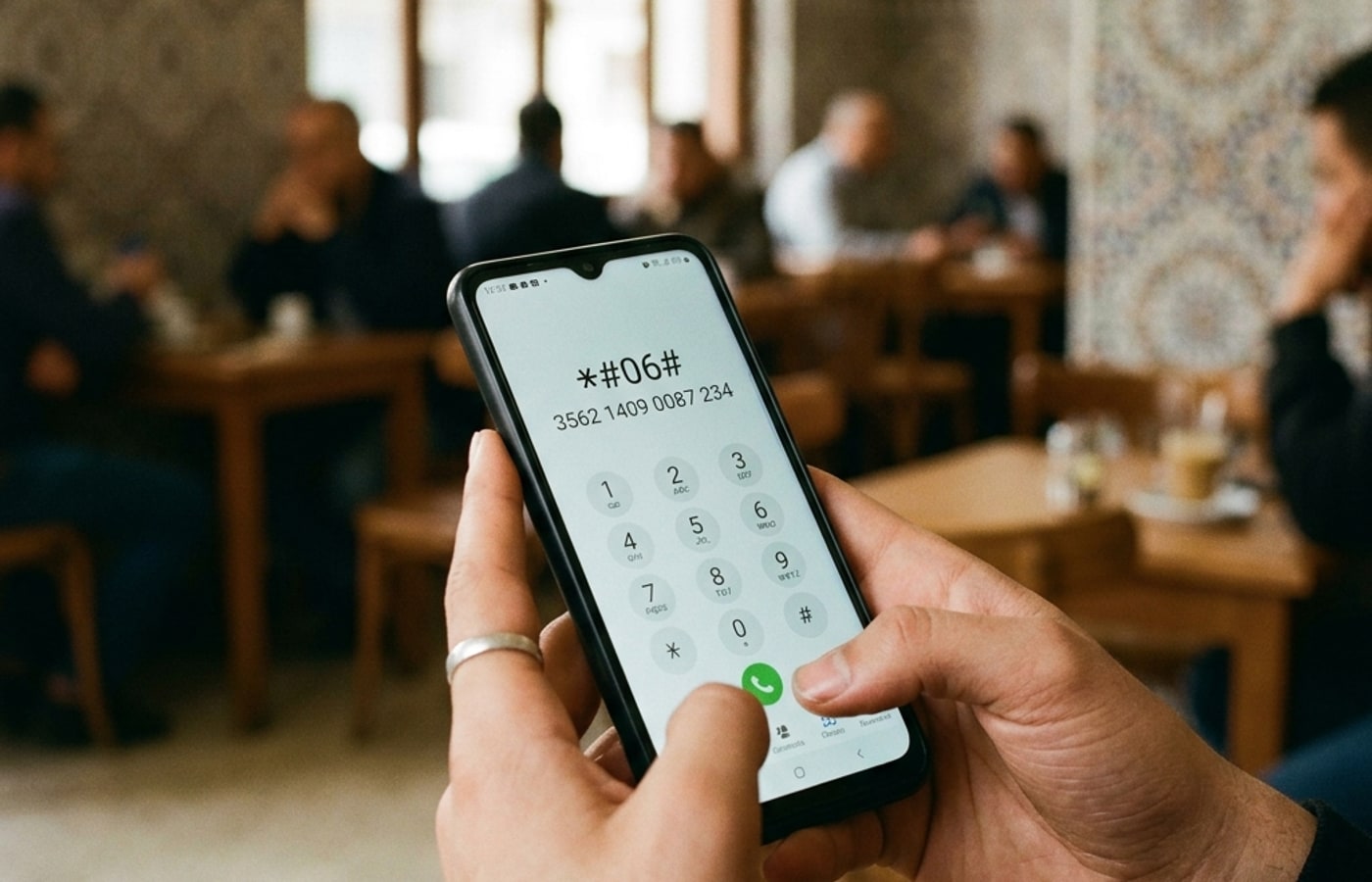
Dial *#06# on the phone and the IMEI appears within seconds. Compare it with the number printed on the box and on the invoice. If the three do not match, walk away. It is the fastest and most useful check before paying for a new or used phone.
The IMEI identifies a device, not an owner. It allows a stolen phone to be blocked on a network, helps verify provenance and tracks warranty. In Algeria the check remains manual: it depends on what the seller agrees to show.
Where to find the IMEI
The universal *#06# code works on iPhone and Android. On iPhone the IMEI is also in Settings, General, About. On Android it is in Settings, About phone, Status. The original box and the invoice carry the same number, usually under a barcode.
A dual-SIM phone has two IMEIs, one per slot. Check the main SIM's number and note the other. A seller who shows only one number while the box lists two creates unnecessary confusion.
What the 15 digits mean
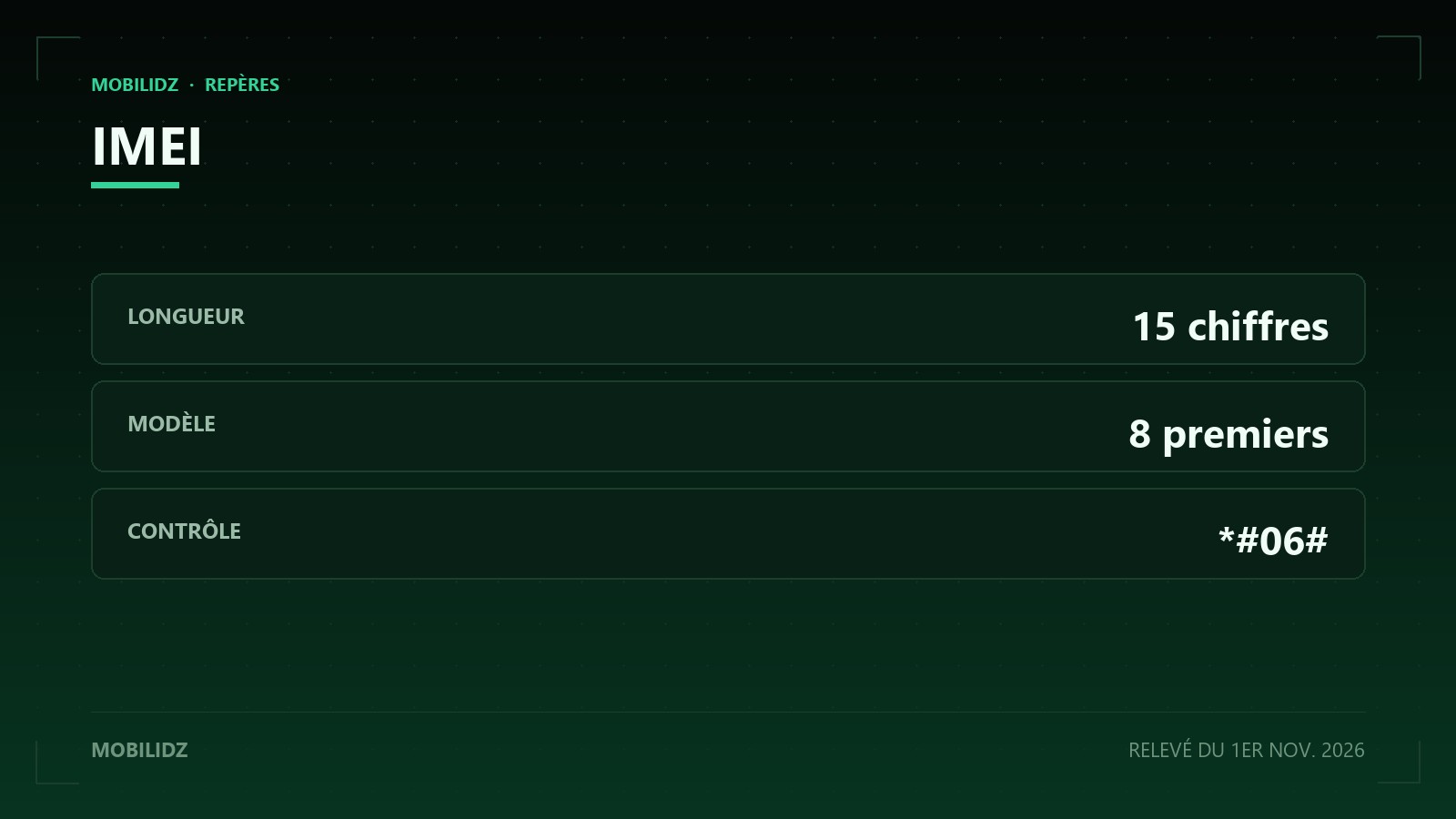
An IMEI has 15 digits. The first eight form the TAC, which identifies the model and manufacturer. The next six are the serial number. The last digit is a check digit that validates the others.
The TAC therefore confirms that a phone sold as an "iPhone 13" really is an iPhone 13, not a lower model refurbished into a different shell. A TAC lookup returns the exact model. If the result does not match the listing, walk away.
The three useful checks
The first is consistency. The IMEI shown by the phone, the box and the invoice must be identical. A mismatch points to a replacement box, a swapped device or a fabricated invoice.
The second is manufacturer coverage. On Apple's site the serial number reveals the exact model and warranty status. Android makers usually offer an equivalent tool. A phone advertised as new but activated two years ago is not new.
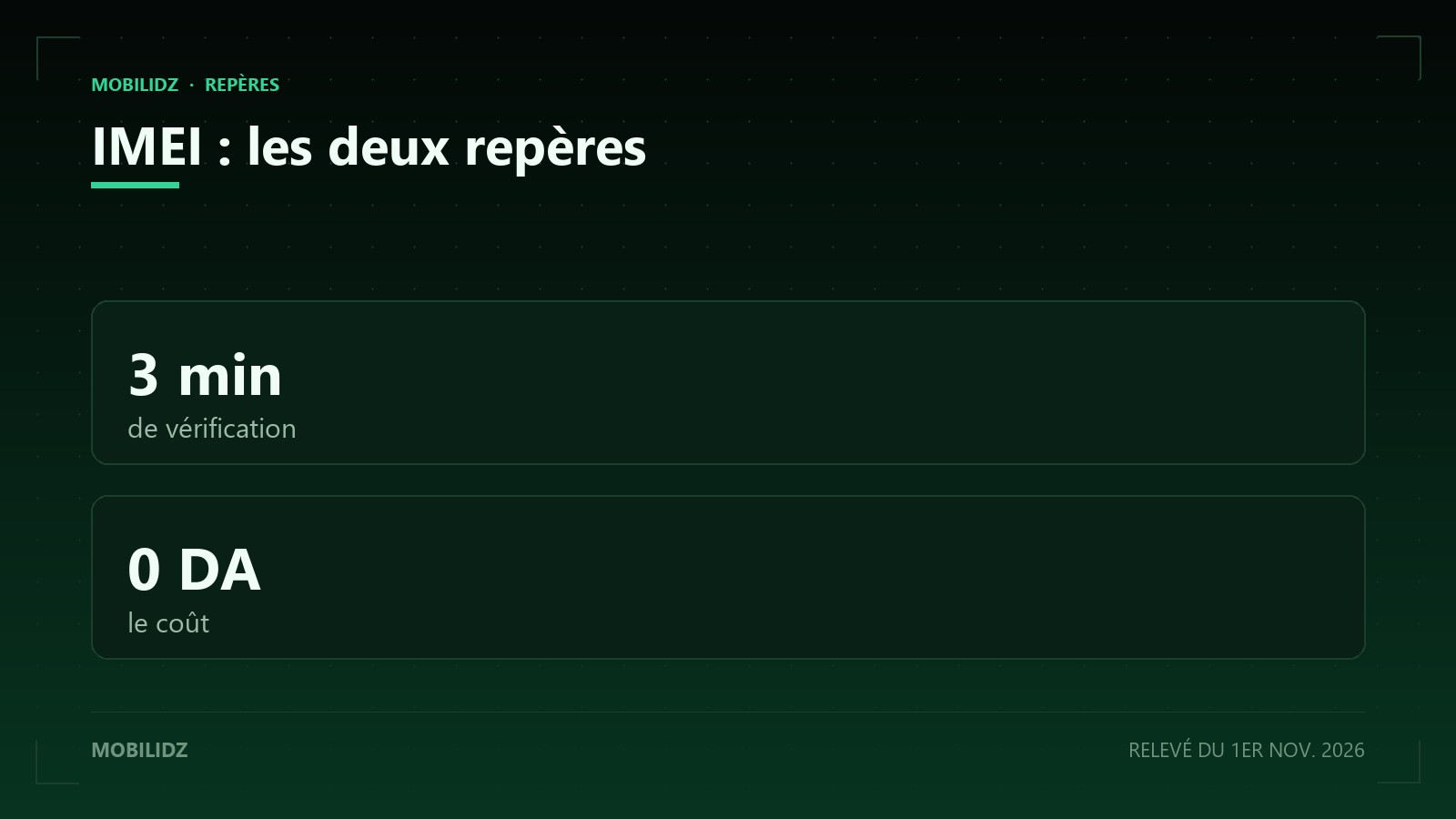
The third is functional. Insert your SIM, make a call, enable mobile data and check that 5G or 4G connects. A blocked IMEI often shows up as no network, not as a clear message.
What an IMEI does not tell you
No public website can confirm with certainty that a phone is stolen in Algeria. International databases such as GSMA's are not open to the public, and services promising a "blacklist check" often return a partial or paid answer.
An IMEI can also be cloned: two devices then share the same number. Cloning is hard to detect before purchase and can cut the connection for both phones. That is one more reason to buy from an identified seller with an invoice.
Finally, the IMEI does not prove battery condition, parts authenticity or software cleanliness. Those checks remain manual.
Warning signs
Refusing to show the IMEI, a box without a number, a handwritten invoice without a shop name, a price 30% below market, a hurried seller, a meeting in a public place without testing the device. One of these is enough to cancel the deal.
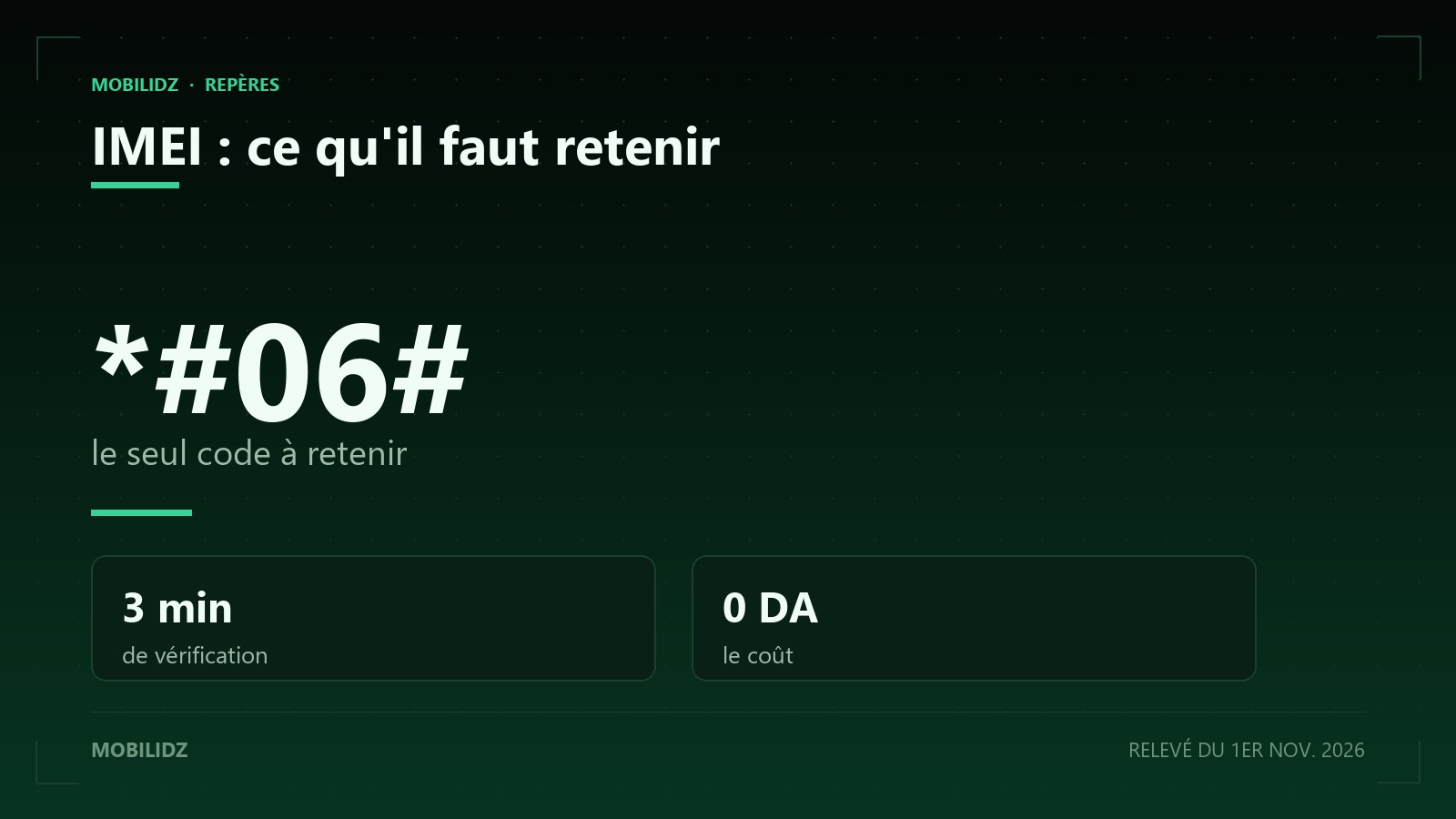
Conversely, a seller who offers to dial *#06#, shows the invoice and lets you test 4G inspires confidence. The check takes three minutes and prevents weeks of trouble.
In short
Dial *#06#, compare with the box and invoice, verify the model through the TAC, then test the network with your own SIM. If one element does not match, walk away. No low price compensates for a phone with a doubtful identity.


